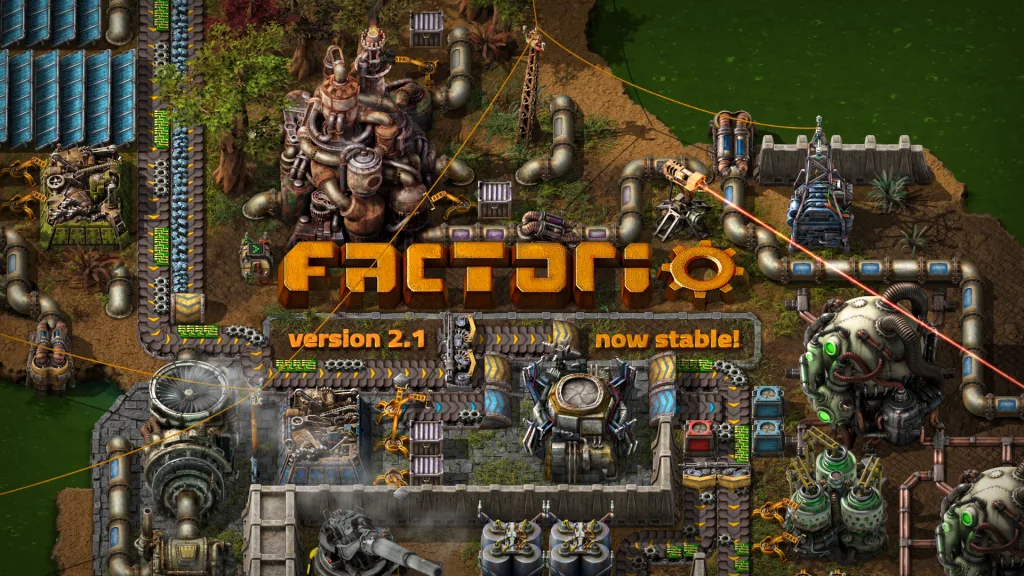
Wube Software marked Factorio 2.1 stable on 23 October 2026, an update it calls the game’s last major one. “After a long summer in experimental, 2.1 is now marked as stable,” the studio wrote in Friday Facts #449. In May it had said: “We envision 2.1 as our last major update of Factorio, and we will shift the focus onto long term support” (Friday Facts #440).
No new planets, a lot of plumbing
Wube is explicit that “2.1 isn’t about new planets, enemies or research trees”. Instead, it collects quality-of-life work, polish and features the team had wanted for 2.0. The highlights:
- Space logistics (Space Age): rockets can carry mixed cargo; platforms can import from any location; items can move directly between platforms; hub requests can be set by circuits; and a new Radar Universe mode is added.
- Platform balance: asteroid damage now depends on the asteroid’s remaining health, the hub is tougher, and drag is based on mass rather than platform width.
- Landing pad unloading bay: a cargo bay that inserters can take items from, with elevated rails allowed above it.
- Quality as an option: Space Age can now be played without Quality, and the Recycler has been split into its own mod. Trains can have quality, and quality modules no longer work in asteroid reprocessing.
- Circuit network: reads and writes can be split onto separate wire colours; labs can be controlled by circuit conditions; boilers, heat exchangers and pipes connect to the network; and land mines can act as tripwires.
- Base game: pumpjacks and burner miners can be flipped, the belt drop arrow is clearer, and fluid-mixing prevention returns. Enemy expansion groups scale with evolution, and biters pick more natural sites for new bases.
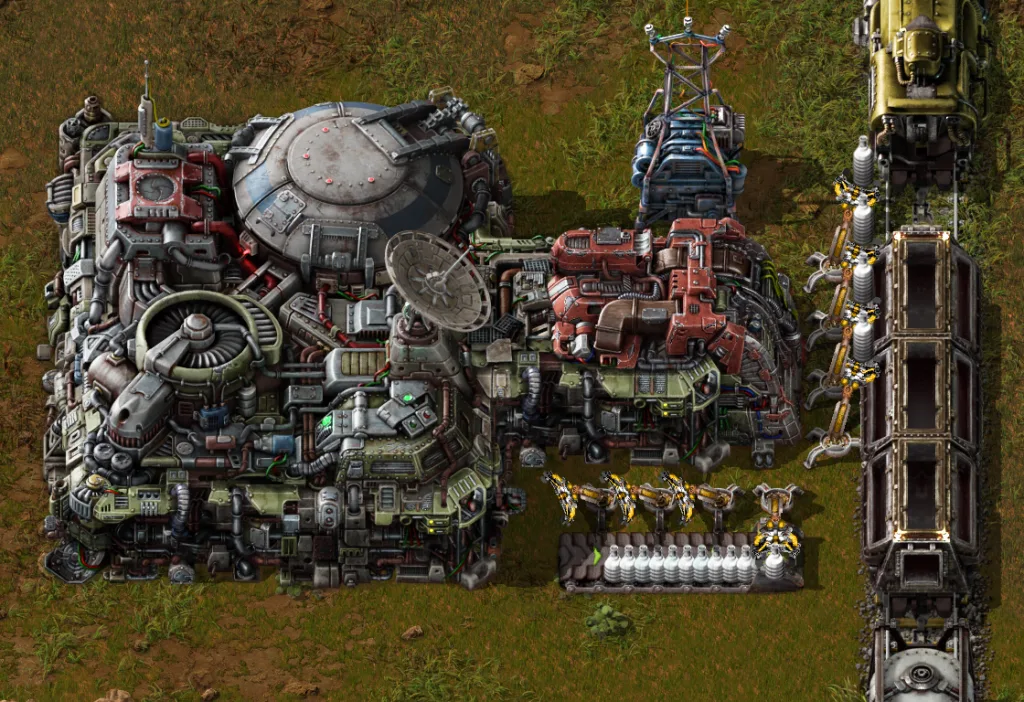
- Graphics and platforms: new art for assembling machines, the oil refinery, the rocket silo and the heat exchanger, a new pump renderer, and planets visible behind space platforms. Linux on ARM64 is now supported natively; the post cites devices such as the Steam Frame.
Back up before upgrading
Version 2.0 saves will load, but Wube warns that changes such as the circuit input/output split can break existing designs. Once a save or blueprint has been updated, it cannot go back to 2.0, so the studio recommends backing up first. Most popular mods were updated during the experimental period, but not all of them.
Long-term support instead of new content
In the May plan, Wube described what comes after 2.1: bug fixes, platform support and compatibility, and modding features. In its words, “we feel we’ve reached a good place to conclude the active gameplay development.” The team has started work on other projects, but warned that “there will not be anything to share for a long time”. Some members will spend less time on Factorio while they work on prototypes. Concept artist Earendel, a central figure in Space Age, announced that he was leaving to make his own games.
Wube set an endpoint, announced it months in advance, and used its final update to fix the systems players had complained about since 2.0. The game players buy from now on is close to the finished design; future work will keep it running and leave room for mods, which have long extended Factorio well beyond its official content.