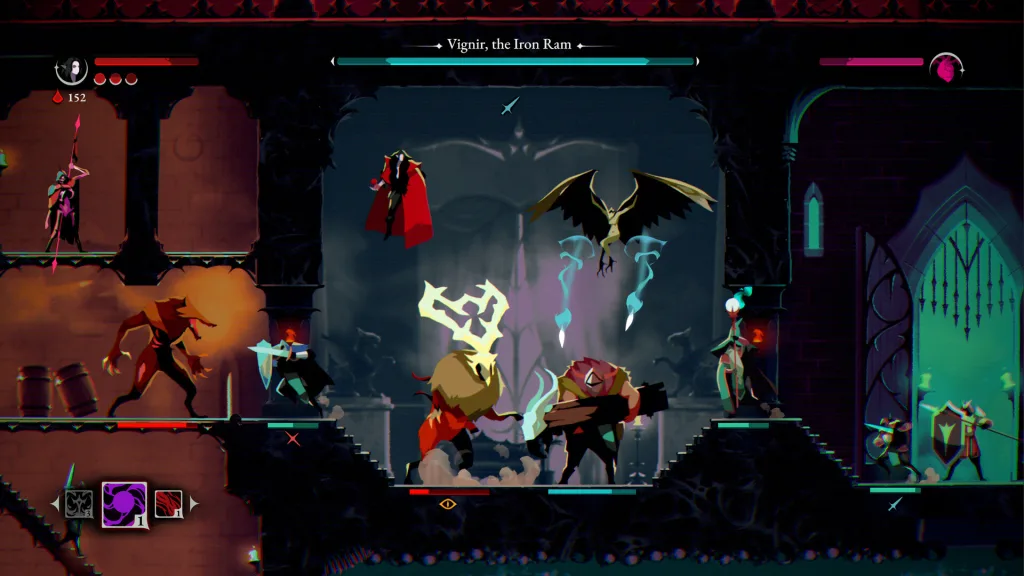
Digital Sun, the Valencia studio behind Moonlighter and Cataclismo, told players on 19 October 2026 that the first playtest of ReVamp will not run on Steam. In a Steam announcement, it said the test will instead be a smaller one on the studio’s Discord server from 29 October, with a public playtest hoped for around January, because it fears a widely shared build could be copied and released before the original.
From Steam sign-ups to a Discord test
ReVamp is a tower-defence game in which the player is Dracula, rebuilding a castle room by room, commanding monsters and fighting invaders. Its Steam page calls it a “Tower Defensevania” and lists a release date of 25 March 2027. Digital Sun is both developer and publisher.
When Digital Sun announced that date on 8 October, it invited players to sign up for playtests through the Steam store page, with access granted in waves, and said joining the Discord server improved the chance of being picked (Steam announcement, 8 October). The new plan keeps the 29 October start and the waves, but the test now takes place only through Discord: players get in by joining the server and taking a Playtesting role. The studio apologised to people who had requested access on Steam and says the launch date does not change.
Why the studio pulled the build
Digital Sun says it has been concerned by recent news of games being reverse-engineered, cloned and published before the original is even out. With launch still months away, “sharing a build with tens of thousands of players felt like too big a risk for ReVamp”, the announcement says. Speaking to Game Developer and on Bluesky, the studio added that “showing games early is how indies get seen and find the fans who keep us going” and that it hopes platforms “keep strengthening protections for original work”. Game Developer and other outlets connect this to developers’ reports that demos, trailers and screenshots are being used with generative AI tools to rebuild games quickly. Digital Sun’s own post does not name a specific case or tool.
Three days earlier, on 16 October, Japanese publisher Alliance Arts cancelled the public Steam Next Fest demo of Drunken Goddess Reflux for similar reasons and replaced it with closed sessions on Discord, as it said in its own Steam announcement and as we reported. The details differ: Alliance Arts gave up a festival demo, while Digital Sun is delaying an open test and keeping a closed one. The direction is the same, with studios moving early builds from open storefronts to communities they can control.
What a closed test costs
Open playtests are not only marketing. They give a team crash reports, balance data and feedback from many players before launch. A Discord test in waves gives the studio more control over who plays and when, but it also means fewer players and less data, and players who do not use Discord are left out. Digital Sun is betting that a few months of restricted access is worth that trade.
For other small teams planning a demo or playtest, the decision raises practical questions:
- How copyable is the hook? A game whose appeal is a simple mechanic or striking look is easier to imitate than one that depends on content volume.
- How long is the gap to launch? Digital Sun links its decision to launch being “months away”. A public build close to release gives copiers less time.
- What data is actually needed now? Some early questions can be answered by a few hundred trusted testers. Others need scale.
Neither studio has shown that its game was cloned. Both are acting on a risk they say has grown, before any platform has changed its rules. Whether Steam or other stores respond is still open.