A spotlight on independent games in Asia between 10 July and 10 October 2026. It complements our three monthly digests (July–August, August–September and September–October) and does not repeat their stories. Claims link to organiser and developer pages where these exist, and otherwise to local news outlets, which we name.
Between July and October 2026, small studios in Asia got noticed mainly through curated showcases, while the quarter’s headlines went to record trade-show crowds, licence batches and earnings at large companies. Across Taiwan, Indonesia, South Korea, Japan and Malaysia, three kinds of organiser built those showcases: developers organising for each other, associations and festivals curating for their scenes, and a state agency running one as industrial policy. Each model rewards something different.
Model one: developers organising for each other
Taiwan’s East Asia Indie Games Celebration
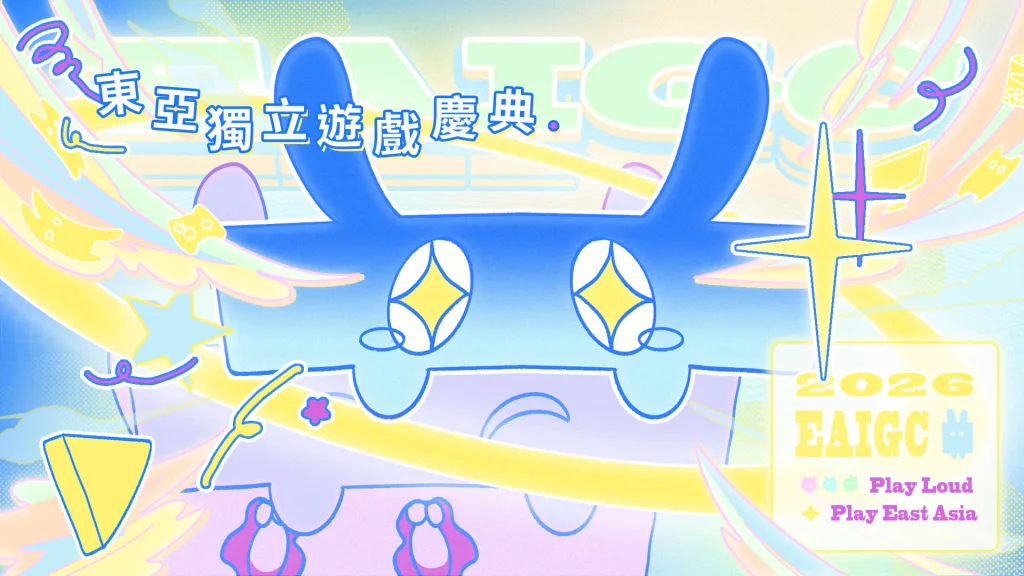
The East Asia Indie Games Celebration (EAIGC) ran on Steam from 5 to 19 August, according to its official schedule page, which lists 103 streamed programmes in languages including Chinese, Cantonese, Japanese, Korean and English. A FilterGame roundup from 22 August describes the event as Taiwan-led and co-hosted by several Taiwanese game teams, and says it brought together more than 500 games, with more than 50 VTubers streaming them.
The model is simple. Instead of competing for a slot in a Western showcase, small East Asian studios pool their audiences: each team’s community sees the others’ games, and streamers provide the discovery that store algorithms rarely give niche titles. The same roundup shows the pipeline behind it, listing a month of Taiwanese demos, playtests and wishlist milestones, including Beastfolk Barber, whose developers said it had passed 100,000 wishlists.
Model two: associations and festivals curating for their scene
Indonesia Game Day on Steam
Indonesia’s game developers’ association, Asosiasi Game Indonesia, ran a Steam sale around Hari Game Indonesia (Indonesia Game Day, or Hargai), which falls on 8 August. As detikInet reported on 2 August, the sale ran from 1 to 10 August with 77 Indonesian titles and ten playable demos, from the horror game Agni: Village of Calamity by Separuh Interactive to smaller local releases. The point is less the discounts than the label: a date on the calendar that tells Indonesian players, and Steam’s recommendations, that local games exist.
Busan Indie Connect Festival breaks its attendance record
South Korea’s Busan Indie Connect Festival (BIC) is selective. Its closing release reports 856 submissions from 57 countries, of which 332 games from 42 countries were selected, roughly two in five. The three in-person days from 14 August drew 42,249 visitors, up about 10.4% and a festival record. The online festival continued until 28 August.
The awards announcement gave the Grand Prix and 10 million won to GARBAGE COUNTRY by Noio, and the Rising Star award for newcomers, with 5 million won, to Yūrei by Team Yūrei. Jury prizes went to Tokatonton: One-Armed Blacksmith by Semo Games and UpBRELLA by AW. The festival’s Google Play Indie Fest awards, held on 15 August, carried the largest single prize: 30 million won for 보존계 by Banjiha Games, with 펭퐁 by 샌디플로어 and 마스터 오브 피스 by 아이엠게임 in second and third. A platform holder funding the biggest cheque at a Korean indie festival shows where mobile discovery money comes from.
Tokyo Game Show’s SELECTED INDIE 80
Tokyo Game Show’s curated indie programme is harder still to enter. The official SELECTED INDIE 80 page says the 80 slots were chosen from more than 1,500 submissions, about one in twenty. This year the programme added Excellence Awards. The Platinum award went to Finding Polka by lidlocks. Seven Gold awards went to Face UFO (Takahiro Miyazawa), Adap+ation (Wataru Ishizaki), No door can Not be opened with a Non-black key (Studio ZeF), YARETA, Become (Valentin Wirth), INTERSCAPE and Stuck Together (Hugecalf Studios).
YARETA is the Taiwanese story here. According to the Chinese-language indie site INDIE-GUIDER, it is made by Mariana Games, a three-person Taiwanese team, and was the only Taiwanese title to win at this level. It is a combat-free open-world exploration game in which the player, an investigator for a “World Library”, uses ropes to cross terrain and touches objects to hear their sounds and memories. A free Steam playtest of about two hours is available in Traditional Chinese, English, Japanese and Korean; no release date has been announced. For a three-person team, a Gold award at Japan’s largest game show is a credential that is otherwise hard to earn.
Model three: a state agency as showcase builder
Malaysia’s MDEC and the SEA Game Awards
In Malaysia, the showcase is run by the state. The Malaysia Digital Economy Corporation (MDEC), which organises LEVEL UP KL, announced 40 finalists for the 2026 SEA Game Awards in August, as listed by The Magic Rain on 12 August. They range from student projects to commercial releases, among them OPERATIVES: Revolve (Enigma Equation), Tikus Tales (WilKGames), Kooeh: A Timeless Delight (Twilight Foundry) and PROJECT K1 (IFiO Studio). In September MDEC followed with a LEVEL UP KL games showcase on Steam to mark Malaysia Day; The Magic Rain reported that it would run until 16 October and featured Malaysian titles including Princess of the Water Lilies and Kooeh. The awards themselves are presented in mid-October.
What each model offers a small studio
Developer-run events like EAIGC are cheap, cross-border and built on communities and streamers, but they depend on volunteer energy. Association and festival models like Hargai, BIC and SELECTED INDIE 80 add selection, prizes and business contacts, and much of their value comes from filtering: BIC exhibited about two in five submissions, SELECTED INDIE 80 about one in twenty. A state-run programme like Malaysia’s ties discovery to national industry goals and can fund continuity from year to year.
For a small studio in Asia this quarter, being chosen was often worth more than a discount: a festival label, an award or a curated Steam page. Whether that attention turns into sales is the question for 2027. Most of the games named here are still demos, playtests or works in progress, and the real test will be how they do at launch.
GameTales uses AI to help research and prepare articles. This article was drafted with Claude Code, and a human editor decides what we publish.