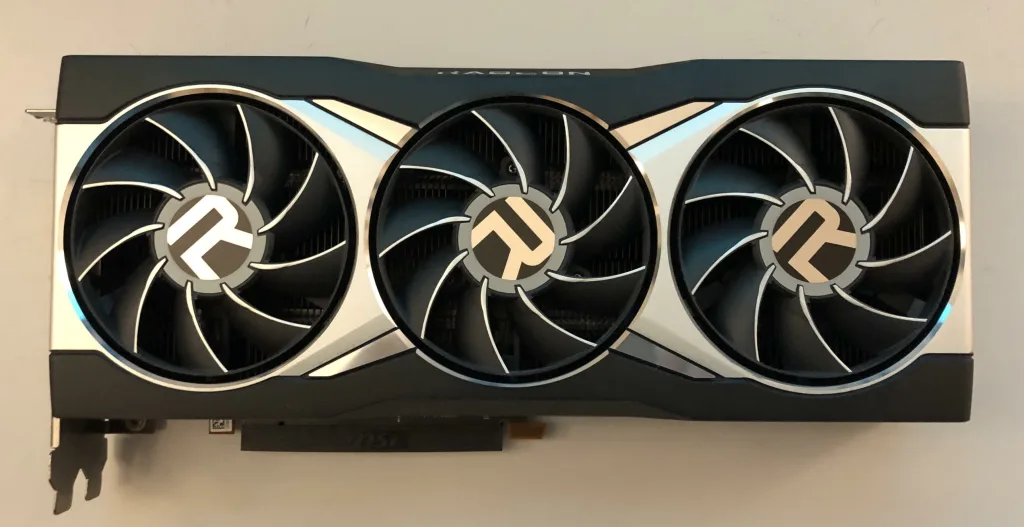

AMD announced on 20 October 2026 that FSR Upscaling 4.1, its machine-learning upscaler, now runs on Radeon RX 6000 series GPUs, the RDNA 2 generation released in 2020, and on several Ryzen processors with integrated graphics. Xbox Series X|S consoles, which use RDNA 2-based graphics, are listed as “coming soon” in the AMD newsroom post.
RX 6000, Ryzen AI and handhelds now, Xbox later
- Radeon RX 6000 series desktop and laptop GPUs, through the AMD Software: Adrenalin Edition 26.10.1 driver.
- Ryzen AI Max systems, including Asus ROG Flow Z13 and TUF A14 laptops, and laptops with Ryzen AI 9 processors.
- Handhelds with Ryzen AI Z2 Extreme, Ryzen Z2 Extreme or Ryzen Z2 A chips, such as the ROG Xbox Ally X. AMD notes that availability and timing on handhelds depend on the device maker.
- Xbox Series X|S: announced in AMD’s video by Xbox CTO Scott Van Vliet, without a date. According to heise, Van Vliet said Microsoft worked closely with AMD to optimise the technology.
How AMD fitted the model onto older hardware
FSR 4 reconstructs a higher-resolution image from a lower-resolution frame with a neural network, which until now kept it to AMD’s newer Radeon generations. AMD says it took the INT8 version of the FSR 4.1 model, originally created for the Radeon RX 7000 series, and optimised it to run on RX 6000 cards. For Ryzen AI 9 and Z2-class chips it introduced a new, more efficient variant aimed at handhelds and mainstream laptops. Asus, which is shipping a preview driver for the ROG Xbox Ally X and Ally X20 on 23 October, says that handheld model is less than half the size of the original INT8 model.
AMD promises a “significant leap in image quality” over FSR 3.1 for RX 6000 owners but published no benchmark figures or test setup with the announcement. According to heise, AMD had originally scheduled RDNA 2 support for early 2027 at the earliest.
FSR 3.1 support is the way in for developers
On PC the upgrade path runs through FSR 3.1. On the ROG Xbox Ally handhelds, games that already support FSR 3.1 or newer can be switched to FSR 4.1 from a Command Center tile; Asus counts more than 400 such games and warns that preview drivers may still contain bugs. For studios, an FSR 3.1 integration is the practical entry point to the ML upscaler across a much larger installed base of AMD hardware.
The console side is less clear. Neither AMD nor Microsoft has said whether Xbox Series games will need patches, which titles will support it first, or what it will cost in frame time on Series S. Van Vliet also leads Xbox Labs, the experimental team Microsoft announced on 13 October. Alongside the expansion, AMD also announced Vulkan support for FSR 4 and frame-pacing improvements for FSR frame generation.