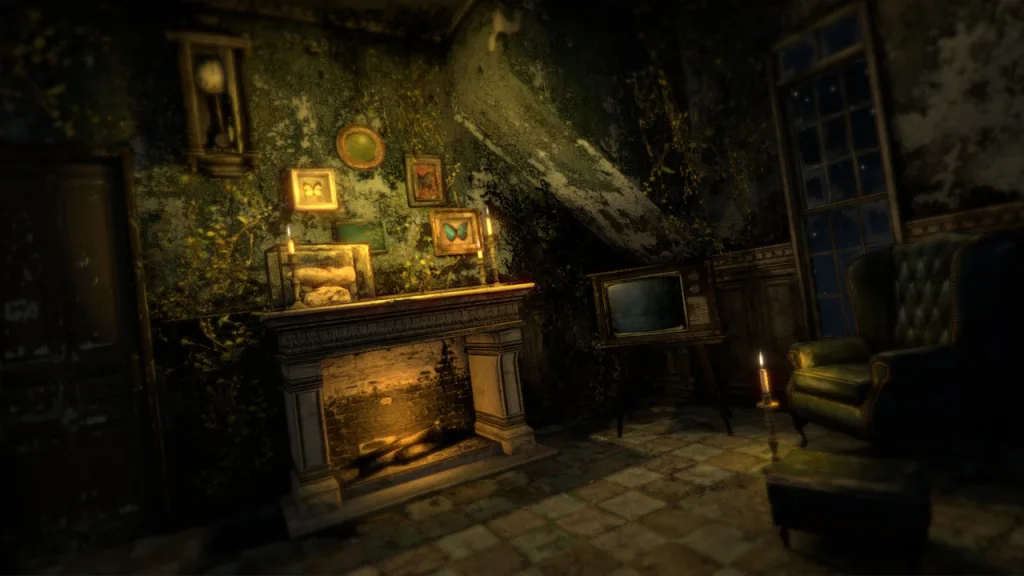
PLAYISM says CINERIS SOMNIA, a Japanese 3D adventure that sold about 700 copies in its 2018 launch week, sold roughly 7,000 in the week after Russian and Simplified Chinese were added in late October 2026, and that about half of those buyers were in China. The publisher gave the figures to AUTOMATON, which published them on 9 November. PLAYISM and AUTOMATON are both run by Active Gaming Media, as the article itself discloses.
The comparison is not like for like. The new languages arrived with a 70% discount, and PLAYISM says that, measured as revenue at each period’s prices and exchange rates, the update week brought in about 2.5 times as much as the launch week. PLAYISM’s Steam announcement of 23 October scheduled the localisation for 26 October, and a follow-up on 27 October said both languages were live in the options menu while the sale ran.
CINERIS SOMNIA is the first game by NAYUTA STUDIO, the two-person team of UTUTUYA and KOZUE. It launched on Steam on 9 October 2018: the player moves through a strange, dreamlike world, mostly through the eyes of a mysterious man, and pieces together the stories of four young women. The studio self-published its second game, Hollow Cocoon, in December 2023. The Steam page now lists English, Japanese with full audio, Russian and Simplified Chinese, and about 1,300 user reviews.
How Chinese dreamcore videos found a 2018 game
According to PLAYISM, sales began to climb noticeably around 2025, before any Chinese text existed. The publisher links that to dreamcore, an internet aesthetic of empty, uncanny but nostalgic spaces related to “liminal spaces” and the Backrooms. China has its own branch, which recreates ordinary Chinese life in the 2000s and tends to feel warm rather than eerie; AUTOMATON names the Chinese-made There Exists Nobody (无人) and Millennium Dream (千禧梦) as hits of the style. Between 2025 and 2026 it resurfaced on Douyin, RedNote and bilibili, and a June 2025 bilibili community video that framed CINERIS SOMNIA as dreamcore had passed 250,000 views, the outlet reports.
PLAYISM also thinks the game suits short clips. It is slow, has few puzzles and gives little direction, so its scenes work on screen without any explanation of how to play. A bilibili joke that players with a poor sense of direction should watch videos instead of playing turned its confusing stretches into free promotion. Its low-resolution textures and low-poly models, which the developers did not intend as a retro look, now match a deliberate retro-3D fashion; a June 2026 bilibili explainer on that trend had more than 670,000 views. PLAYISM calls China one factor among several: the game had earlier waves of popularity in Western and Russian-speaking communities, where fans cosplayed its characters and got its logo tattooed.
The figures give publishers of older Japanese indies a rare published data point. Chinese players found the game through video first and the Chinese text followed; the tenfold jump in units then came together with a 70% discount, which is why revenue rose about 2.5 times rather than ten.